Swing and slide are the two dominant automatic gate types, and the choice between them isn’t really about style — it’s about your site. A driveway’s slope, available space, and daily traffic pattern usually make the decision for you before cost even enters the conversation.
This guide compares the two directly: what each costs, what each requires from your property, and where one clearly beats the other.
On this page: How each type works · Side-by-side comparison · Cost differences · Site requirements · Safety code & compliance · DFW & Allen specifics · Residential vs. commercial · Common mistakes · Maintenance & lifespan · How to decide · Glossary · FAQ
How Swing and Slide Gates Actually Work
Quick answer: A swing gate pivots open on hinges like a door, needing clear space for the arc. A slide gate rolls sideways along a track, needing fence-line clearance equal to the gate’s width but no swing space.
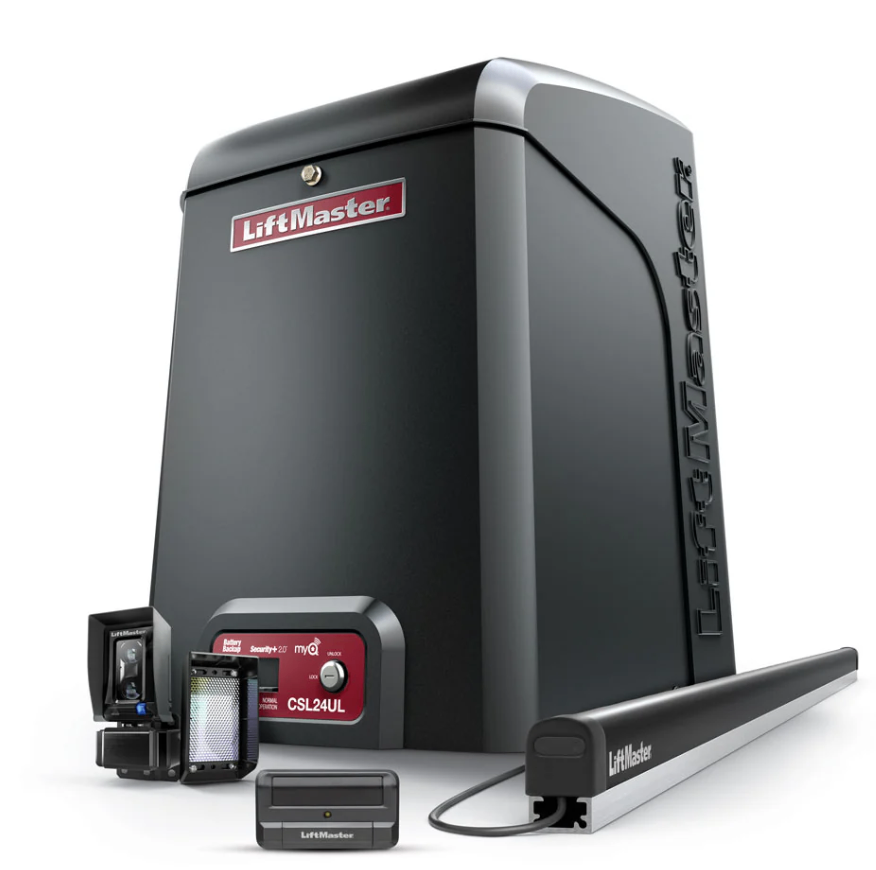
Swing gates use an arm or underground operator to pivot the gate panel(s) open on hinge posts, the same basic motion as a large door. Slide gates use a track-mounted operator and drive gear to roll the gate panel sideways along a track, parking it alongside the fence line when open.
Swing vs. Slide: Side-by-Side Comparison
| Factor | Swing Gate | Slide Gate |
|---|---|---|
| Typical install cost | $3,500–$7,500 | $4,000–$9,000 |
| Space needed | Clear arc for the swing | Fence-line run equal to gate width |
| Sloped driveways | Often difficult | Usually the better choice |
| Wind exposure | More exposed to wind load | Lower wind resistance concerns |
| Maintenance points | Hinges, arm/underground operator | Track, rollers, drive gear |
| Best for | Flat residential driveways | Sloped or narrow sites, commercial |
Where the Cost Difference Comes From
Quick answer: Slide gates typically cost somewhat more than swing gates because of the track, receiver post and additional site grading they require — not because the operator itself costs more.
A swing gate’s main site cost is two footings for the hinge and latch posts. A slide gate needs a level, prepared track bed running the full width of the gate plus a receiver post at the far end — more concrete and grading work, which is usually the bulk of the price difference. For full installation pricing by gate type, see our gate installation cost guide.
Site Requirements That Decide the Choice
- Slope — a sloped driveway usually rules out a swing gate; a slide gate on a level track handles slope far better.
- Available width — a slide gate needs fence-line space equal to its own width to park open; a swing gate needs open air space instead.
- Traffic volume — higher-cycle commercial sites often favor slide gates and commercial-duty operators built for frequent use.
- Aesthetics — ornamental swing gates are the more common choice for upscale residential entries with stone columns.
Safety Code and Compliance
Quick answer: Both swing and slide gates must meet UL 325 entrapment-protection requirements with photo-eye sensors and/or safety loops, regardless of type. Construction commonly follows ASTM F2200, and Texas gate installers are licensed through the TDLR.
The entrapment-protection requirements under UL 325 apply equally to both gate types — a slide gate closing on a vehicle is just as much a hazard as a swing gate doing the same. Gate and fence assemblies commonly follow ASTM F2200 guidance. In Texas, gate installers are licensed through the TDLR — ours is License #B31188501.
Swing vs. Slide Gates Across Dallas, Fort Worth and Allen
In Allen, Plano and Frisco, we see mostly swing gates on flat residential driveways and slide gates on the sloped or narrower lots common in older neighborhoods. Commercial and industrial properties along DFW’s logistics corridors overwhelmingly use slide gates, since they hold up better under high daily cycle counts.
Residential vs. Commercial: Which Type Wins
Residential driveways with flat, open space usually do best with a swing gate, often paired with a keypad or mobile app — see our access control page. Narrower or sloped residential lots often need a slide gate instead.
HOA and gated communities frequently choose slide gates for higher-traffic entries, paired with a telephone entry system — see our intercom systems page.
Commercial and industrial properties overwhelmingly use slide gates with commercial-duty operators, since they're built for the higher daily cycle counts these sites see.
Common Mistakes When Choosing a Gate Type
- Installing a swing gate on a sloped driveway, causing the gate to drag or bind against the ground.
- Choosing a slide gate without enough fence-line clearance for it to fully open.
- Using a residential-duty operator on a gate that sees commercial-level daily traffic, regardless of type.
- Skipping a level track bed on a slide gate installation, leading to premature roller and track wear.
Maintenance and Lifespan by Type
Swing gates rely on hinges and the operator arm holding up over years of cycling; slide gates rely on the track staying clear of debris and the rollers staying lubricated. Both types, correctly sized and maintained, can run well over a decade. See our Automatic Gate Maintenance and Lifespan guide, already live, for a full maintenance schedule.
How to Decide: A Simple Framework
- Is your driveway sloped? If yes, a slide gate is almost always the better fit.
- Do you have fence-line space equal to the gate’s width? If not, a swing gate may be the only option.
- How much daily traffic will the gate see? Higher-cycle commercial sites usually favor slide gates.
- What look are you going for? Ornamental iron swing gates are the more common choice for upscale residential entries.
Glossary: Terms Worth Knowing
| Swing Gate | A gate that pivots open on hinge posts, like a large door. |
| Slide Gate | A gate that rolls sideways along a track to open. |
| Receiver Post | The post a slide gate latches against when fully closed. |
| Drive Gear | The gear mechanism that moves a slide gate along its track. |
| Wind Load | The force wind exerts on a gate panel, a factor in swing gate operator sizing. |
Getting the Right Gate Type for Your Property
Because the right choice depends entirely on your site, we do a site survey before recommending swing or slide. Call 682-516-9940 or request a free estimate below.
Frequently Asked Questions
Is a swing gate or slide gate better for a sloped driveway?
A slide gate is almost always the better choice for a sloped driveway, since it moves along a level track rather than swinging through an arc.
Which gate type costs less to install?
Swing gates typically cost somewhat less to install than slide gates, mainly because slide gates require more site work for the track bed.
Do commercial properties use swing or slide gates?
Commercial and industrial properties overwhelmingly use slide gates, since they hold up better under high daily cycle counts.
Can I convert a swing gate to a slide gate?
Yes, but it’s essentially a new installation — a slide gate needs a track bed and receiver post that a swing gate site typically doesn’t have.
Which gate type needs less maintenance?
Neither is inherently lower-maintenance; swing gates rely on hinges and the operator arm, while slide gates rely on a clear, lubricated track and rollers.
Do both gate types need the same safety sensors?
Yes. Both swing and slide gates must meet UL 325 entrapment-protection requirements with photo-eye sensors and/or safety loops.
Which gate type is better for narrow driveways?
It depends on which direction has clearance: a slide gate needs fence-line space to park open, while a swing gate needs open air space to arc into.
Are ornamental iron gates usually swing or slide?
Ornamental iron gates with stone columns are most commonly built as swing gates for residential entries.
Do you install both swing and slide gates in Dallas–Fort Worth?
Yes, we install and service both gate types across Dallas, Fort Worth, Allen, Plano, Frisco and McKinney.
How do I know which gate type is right for my property?
The clearest way is a site survey — we evaluate your driveway’s slope, available space and traffic before recommending a type.