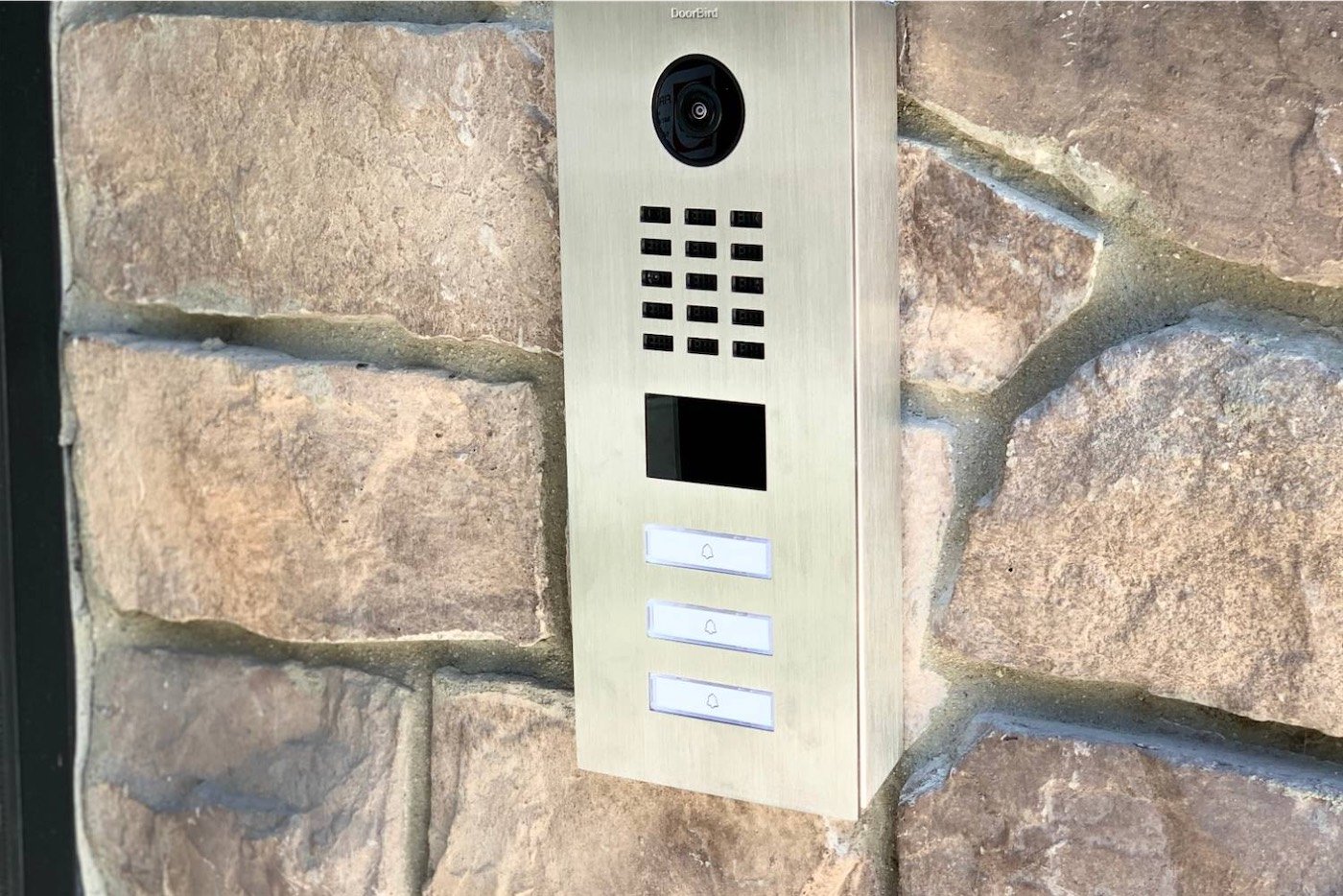
Video intercom has become the default choice over audio-only for most new installations, since seeing a visitor before responding is a meaningful security improvement for very little added cost. But not all video intercoms are the same — resolution, field of view, and how the video is delivered (wired panel vs. mobile app) vary significantly between systems.
On this page: How video intercom works · Features that matter · Mobile app vs. wall panel · Residential vs. commercial vs. multifamily · Code & accessibility · DFW & Allen specifics · Common mistakes · Choosing a system · Glossary · FAQ
How Video Intercom Works
Quick answer: A visitor presses a call button on an entry station with a built-in camera; the resident or staff member sees live video and audio on a wall panel or phone app before deciding to let them in.
The entry station houses a camera, microphone, speaker and call button (or directory, for multi-tenant systems). When triggered, it connects to an answering device — either a dedicated wall-mounted monitor or a smartphone app — over wiring or the property's network.
Features That Actually Matter
- Wide field of view — catches more than a narrow view directly in front of the camera, reducing blind spots.
- Night vision/low-light performance — most visitor calls at a gate or door happen in low light at some point.
- Two-way audio clarity — matters more than most people expect, especially outdoors near traffic noise.
- Door/gate release integration — the ability to remotely unlock without a separate system.
- Call recording/history — useful for reviewing who visited while you weren't available to answer.
Mobile App vs. Wall Panel
Quick answer: A mobile app lets you answer and release the door from anywhere; a wall panel is simpler and doesn't depend on a smartphone or internet connection.
Mobile app answering is increasingly the preferred option, especially for households or businesses where someone isn't always near a fixed panel. That said, a wall panel remains a solid, dependable option and some properties use both — a panel as the primary answering point, with app access as a backup when away.
Video Intercom for Homes, Businesses and Apartments
Residential systems are usually a single entry station paired with an in-home panel or app, sometimes tied to a gate.
Commercial entrances often pair a video intercom with access control for visitor screening at a staffed or unstaffed lobby.
Multifamily buildings need a directory-based system supporting many units — see our apartment and multifamily intercom guide for how this works at scale.
ADA Rules for Video Entry Stations
Video intercom entry stations serving the public should meet ADA accessibility standards for mounting height and control usability. The installer should be licensed through the Texas DPS Private Security Program. A1’s license is #B31188501.
Video Intercom Across Dallas, Fort Worth and Allen
We install video intercom for single-family homes, HOA gate entrances, and multifamily buildings across Allen, Plano, Frisco and the greater DFW area.
Common Video Intercom Mistakes
- Choosing a system based on price alone without checking night vision and field-of-view performance.
- Relying solely on a mobile app with no backup panel, leaving no way to answer if the app or network is down.
- Not planning network bandwidth for a multi-unit video system upfront.
Choosing the Right Video Intercom
- Do you need mobile app answering, a wall panel, or both?
- How's the low-light and night vision performance? Most calls happen at some point in low light.
- Does it integrate with your gate or door release hardware?
- For multi-unit properties, does it support the directory scale you need?
Glossary: Video Intercom Terms
| Entry Station | The visitor-facing intercom unit with camera, mic and call button. |
| Field of View | How wide an area the camera captures at the entry point. |
| Two-Way Audio | Audio that lets both the visitor and resident speak and be heard. |
Choosing the Right Video Intercom for Your Property
We’ll walk through your property and answer preferences to recommend the right system. Call 682-516-9940 to compare options for your entry, or request a free estimate below.
Frequently Asked Questions
Is video intercom worth the extra cost over audio-only?
For most properties yes, since seeing the visitor before responding is a meaningful security improvement for a relatively small cost increase.
Does a video intercom need Wi-Fi at the door?
It needs a network connection, but Wi-Fi isn't the best one outdoors. A wired PoE connection carries power and data on one cable and is more reliable at an entry, while gates far from the building may use a wireless bridge or a cellular unit.
Does video intercom work at night?
Quality varies by system; low-light and night vision performance is one of the most important features to check before choosing.
Can video intercom unlock a door or gate remotely?
Yes, most systems support a door or gate release function so you can let a visitor in without walking to the entry.
What's the difference between residential and multifamily video intercom?
Multifamily systems need a directory supporting many units, while residential systems are typically a single entry point tied to one household.
Can a video intercom record the people who ring?
Many can. Systems commonly save a snapshot or short clip of each call, and some send video to the property's camera recorder. Check how long the system keeps those records and who can view them.
Can an existing wall panel intercom add mobile app support?
In some cases, depending on the system's compatibility; it's worth having a technician assess your existing setup.
Can a video intercom help with deliveries at a business back door?
Yes. Staff can see the driver and the truck before releasing the door, which cuts down on doors being propped open for deliveries. Pairing it with a camera on the dock or rear lot gives you a record of each delivery.
Do video intercoms hold up in direct Texas sun and heat?
The right ones do. Look for an outdoor-rated unit with a weatherproof rating and an operating temperature range that covers DFW summers, and for wide dynamic range on the camera, since a west-facing entry in afternoon sun can wash out the picture.
Can one video intercom system handle both a front door and a gate?
Yes. Most systems support several entry stations, each with its own release, and the answering screen or app shows which entrance is calling. One station can also release two openings if it has two outputs wired to them.