Multi-unit properties — apartments, condos, and gated single-family communities — need an intercom system that scales differently than a single-family home. The core challenge is directory design: letting a visitor reach the right unit or resident without requiring a dedicated line for every single one.
On this page: How directory systems work · Gated communities vs. apartment buildings · Pairing with access control · Cost factors · Code & accessibility · DFW & Allen specifics · Common mistakes · Questions to ask · Glossary · FAQ
How Directory Intercom Systems Work
Quick answer: A directory system lets a visitor scroll or search for a specific unit or resident name, then places a call to that resident's phone, in-unit panel, or app — without needing a separate physical line for every unit.
Modern directory systems route the call over the property's network rather than dedicated wiring per unit, which is what makes them practical at scale. Residents typically answer via a smartphone app, letting them grant access remotely even when they're not home.
Gated Communities vs. Apartment Buildings
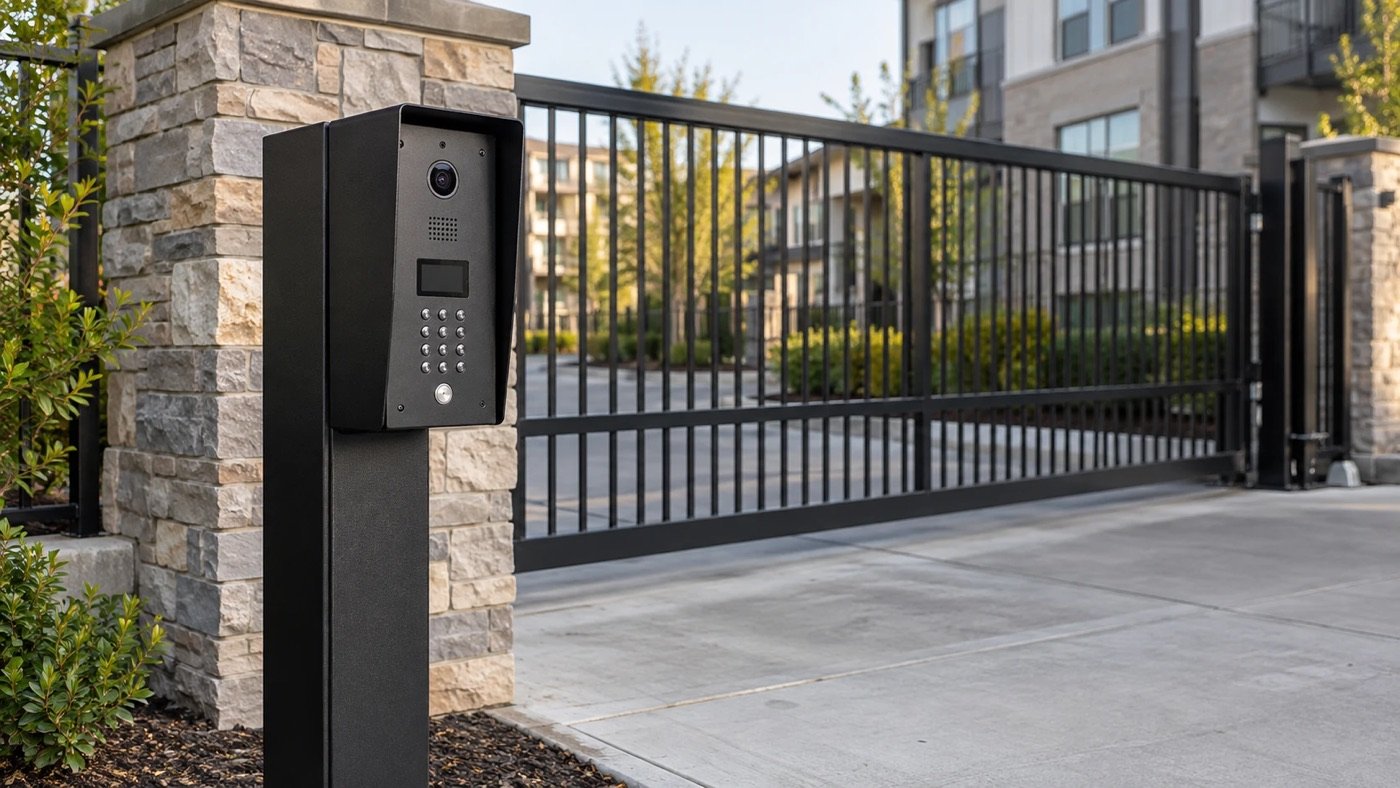
A gated single-family community typically uses a telephone entry system at the vehicle gate, letting a visitor call a resident's phone number directly to request gate access — see our gate installation cost guide for how this pairs with the gate itself.
An apartment or condo building typically uses a directory-based panel at the building's main entrance, since there are far more units in a smaller physical footprint than a gated neighborhood.
Pairing With Access Control
Multifamily intercom systems are frequently paired with tenant-level access control so residents use the same credential for their unit door and common areas as they do to grant visitor access through the intercom. See our commercial access control planning guide for how these systems integrate at scale.
What Affects Multifamily Intercom Cost
- Number of units — directory systems scale in licensing and setup cost with unit count.
- Number of entry points — a property with multiple building entrances needs a station at each.
- Audio vs. video directory — video adds camera hardware and network bandwidth needs.
- Integration with access control — tying the intercom to tenant credentials adds programming time.
See our intercom installation cost guide for pricing ranges by system type.
ADA and Licensing for Directory Systems
Directory intercom stations serving the public must meet ADA accessibility requirements, including mounting height and usable controls for residents and visitors with disabilities. In Texas, intercom and access control installers are licensed through the Texas DPS Private Security Program; our license is #B31188501.
Multifamily Intercom Across Dallas, Fort Worth and Allen
Gated single-family communities are common across Allen, Plano and Frisco, typically using telephone entry at the vehicle gate, while apartment and condo directory systems are more concentrated closer to Dallas and Fort Worth's urban cores.
Common Multifamily Intercom Mistakes
- Choosing a system that doesn't scale cleanly as units are added or turned over.
- Not planning for network bandwidth needs of a video directory system across many concurrent calls.
- Skipping ADA accessibility review at the entry station.
Questions to Ask a Multifamily Intercom Installer
- Can the system scale as units or entry points are added?
- Does it integrate with our access control platform?
- Do residents answer via app, phone, or both?
- Are you licensed to install entry systems in Texas, and are you insured? (Yes. Our Texas license is #B31188501, and we carry insurance.)
Glossary: Intercom and Directory Terms
| Directory System | A multi-tenant intercom that lists units for a visitor to select and call. |
| Telephone Entry | A system that lets a visitor call a resident's phone directly to request access. |
| Tenant Credential | An access control credential assigned to a specific resident, often shared with the intercom system. |
Planning Your Multifamily or Gated Community Intercom
We’ll design a directory or gate telephone entry system that fits your property's unit count and entry points. Call 682-516-9940 to talk through your community, or send the details through the estimate form below.
Frequently Asked Questions
What's the difference between a gate intercom and an apartment intercom?
A gate intercom typically calls a resident's phone directly for vehicle gate access, while an apartment intercom uses a directory system to reach a specific unit at a building entrance.
How many entry points should an apartment intercom cover?
Every place a visitor actually arrives: usually the main vehicle gate, pedestrian gates and the lobby or building doors, and sometimes a leasing office or package room. Each added entry station raises the cost, so it pays to map how guests and deliveries really move through the property first.
How does an intercom system scale for a large apartment building?
Directory systems route calls over the property's network rather than dedicated wiring per unit, which is what allows them to scale to many units.
Can intercom be paired with tenant access control credentials?
Yes, many multifamily systems tie the intercom to the same access control platform used for unit doors and common areas.
Do gated communities need a directory system?
Not usually — most gated single-family communities use a simpler telephone entry system that calls a resident's phone directly.
What happens when a new resident moves in or out?
The directory or telephone entry list is updated in the management platform, without requiring hardware changes.
How high should an apartment call box be mounted for ADA?
Under the 2010 ADA Standards, controls people need to use should sit within a reach range of 15 to 48 inches above the ground and work with one hand, without tight grasping or twisting. Directory screens, keypads and call buttons at public entrances are planned around that range.
Should an apartment property choose a cellular call box or a networked one?
A cellular call box avoids running phone or data lines out to a distant gate but carries a monthly cellular service charge. A unit on the building network suits entrances close to the building, where power and cable are already nearby. Our intercom cost guide covers how either choice affects price.
What happens to an app-based intercom when the property's internet drops?
That depends on how it connects. A cellular call box keeps calling residents because it doesn't rely on the property's internet. A network-based system may lose app calls and remote changes until the connection returns, which is why some properties add a cellular backup at the main entry.
How do residents let in guests for a party or a contractor visit?
On most cloud-managed systems, residents create a temporary code or virtual pass in the app with a start and end time, so they never have to share a permanent code. Management can see when each pass was used.