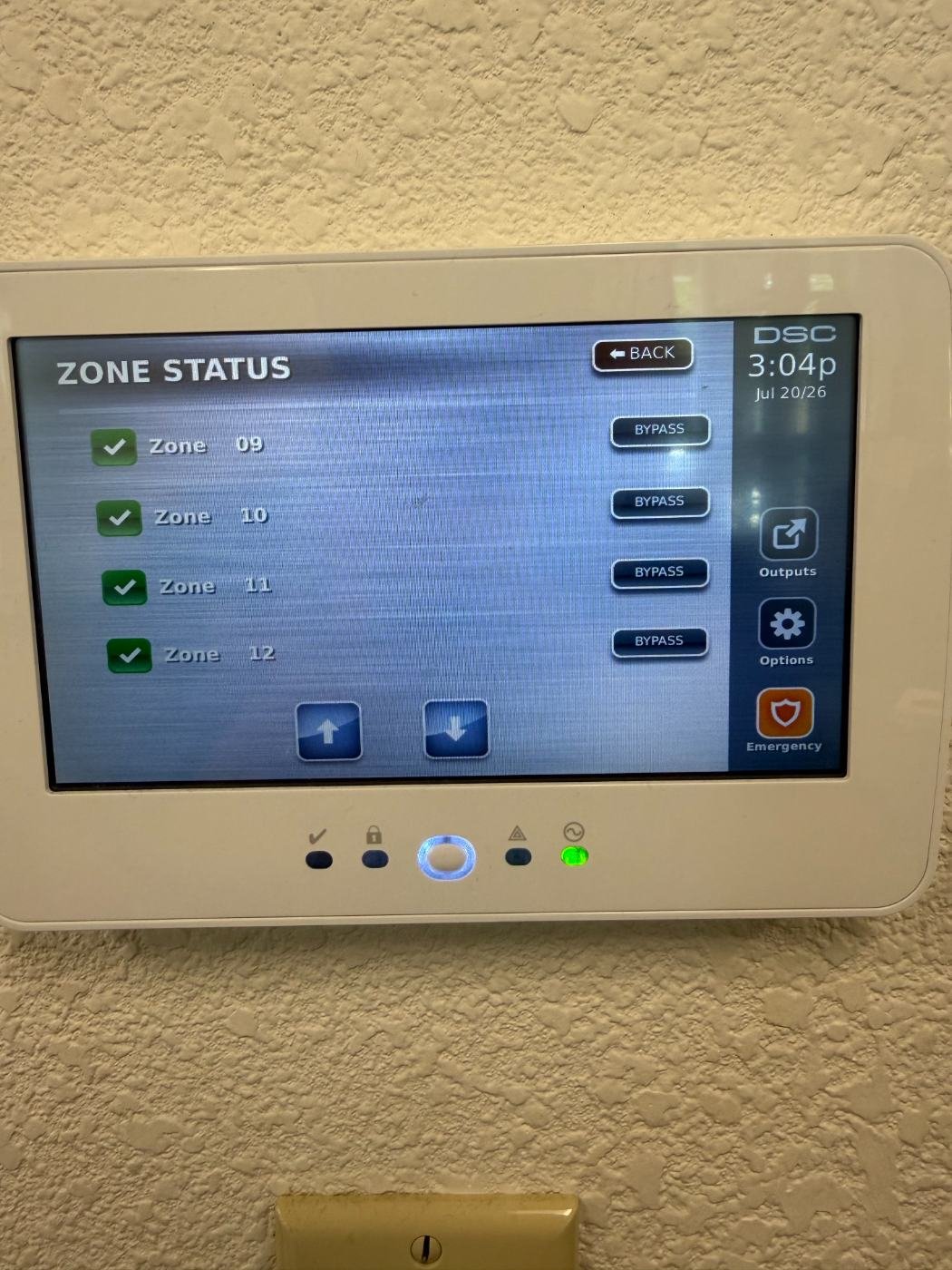
An alarm system's cost depends on far more than just the keypad and a few sensors — the number of protected zones, whether it's professionally monitored, and how it integrates with cameras or access control all move the price. Understanding these pieces helps you get an accurate quote instead of comparing unlike packages.
On this page: What goes into an alarm system · Cost by system type · Monitoring cost · What drives price · Code & compliance · DFW & Allen specifics · Residential vs. commercial · Common mistakes · Installation process · Questions to ask · Glossary · FAQ
What Goes Into an Alarm System
Quick answer: A complete alarm system includes a control panel, a keypad, door and window sensors, motion sensors, and typically a monitoring connection — either cellular or internet-based.
The control panel is the system's brain, processing input from every sensor and triggering an alarm or monitoring notification. See our door, window and motion sensor placement guide for how sensors are chosen and placed.
Alarm System Installation Cost by Type
Quick answer: A basic residential alarm system typically runs $300–$800 installed. A fuller residential system with more sensors typically runs $800–$2,000. Commercial systems typically run $1,500–$6,000+ depending on square footage and zone count.
| System Type | Estimated Cost Range |
|---|---|
| Basic residential (few doors/windows) | $300–$800 |
| Full residential (motion, more zones) | $800–$2,000 |
| Commercial system | $1,500–$6,000+ |
Treat these as starting points for a budget; your actual quote depends on the property.
Monitoring Cost
Professional 24/7 monitoring typically runs $20–$60 per month, depending on the monitoring provider and whether the system includes cellular backup, video verification, or smart-home integration. Self-monitored systems (app notifications only, no monitoring center) avoid this monthly cost but rely on the property owner to respond directly.
What Moves an Alarm Quote Up or Down
- Number of doors, windows and zones — more protected points mean more sensors and labor.
- Wired vs. wireless sensors — see our wired vs. wireless alarm guide for how these compare.
- Professional monitoring — adds an ongoing monthly cost but ensures a response even when you can't respond directly.
- Integration with cameras or access control — adds design and programming time to a combined system.
Alarm Permits and Licensing
Commercial alarm systems in many jurisdictions require a false-alarm permit from local police or fire departments, and some commercial buildings need alarm interconnection with fire/life-safety systems. Alarm companies in Texas need a license from the Texas DPS Private Security Program; we hold License #B31188501.
Alarm Installation Across Dallas, Fort Worth and Allen
We install residential and commercial alarm systems across Dallas, Allen, Plano and Frisco, and can confirm any local permit requirements as part of the project.
Residential vs. Commercial Alarm Systems
Residential systems typically cover entry doors, ground-floor windows, and interior motion sensors, often paired with security cameras.
Commercial systems typically cover more zones and integrate with access control and cameras — see our commercial security system installation guide.
Common Alarm Buying Mistakes
- Under-protecting a property by skipping motion sensors in favor of door/window contacts alone.
- Choosing self-monitoring for a property that's frequently unoccupied.
- Not confirming local false-alarm permit requirements before a commercial install.
How Alarm Installation Works
- Site assessment — walking the property to plan sensor placement and zone count.
- Written estimate — itemized by hardware, labor and monitoring plan.
- Installation and programming — mounting sensors, wiring, and configuring the panel.
- Monitoring activation — connecting to a monitoring center if selected.
- Walkthrough — showing you how to arm, disarm, and respond to alerts.
Questions to Ask an Alarm Installer
- Does your company hold a Texas alarm license? (We do: DPS License #B31188501, and we’re insured.)
- What monitoring options do you offer?
- Can this integrate with our cameras or access control?
- Will the estimate list the panel, sensors and monitoring separately?
Glossary: Alarm Terms
| Zone | One input on the panel, which can be a single sensor or several grouped together. |
| Professional Monitoring | A monitoring center that responds to alarm triggers and contacts you or emergency services. |
| Cellular Backup | A connection method that keeps the system reporting even if internet or phone lines are down. |
Getting an Accurate Alarm Installation Estimate
Because alarm cost depends on zone count, monitoring choice and integration needs, we assess on-site before quoting. To get a firm number for your property, call 682-516-9940 or use the estimate form below.
Frequently Asked Questions
How far apart are home and business alarm prices in Dallas?
A basic residential system runs $300 to $800, and a fuller residential system runs $800 to $2,000. Commercial systems run $1,500 to $6,000 or more, mostly because they cover more doors, more zones and usually a larger building.
Is professional monitoring worth the monthly cost?
For most properties yes, especially when unoccupied for periods of time, since it ensures a response even when you can't respond directly.
What's included in a basic alarm system?
A control panel, keypad, and sensors on primary entry doors, typically expandable to windows and motion sensors.
What's the most cost-effective way to alarm a large warehouse?
Cover the space, not every opening. A few long-range motion detectors or photoelectric beams can protect a big open floor, while overhead door contacts go on the dock doors and standard contacts on the personnel doors. That usually costs less than a contact on every window and keeps the zone count manageable.
Why do some companies offer free alarm equipment?
The equipment is usually paid for through a multi-year monitoring contract, so the cost shows up in the monthly bill instead of upfront. Before signing, check the contract length, the cancellation terms and who owns the equipment when the contract ends.
How much does monitoring cost per month?
Professional monitoring typically runs $20 to $60 per month depending on the provider and features included.
Do I need a landline for alarm monitoring?
No. Most current panels report to the monitoring center over a cellular communicator, the internet, or both. Older panels that relied on a landline or a 3G cellular module often needed an upgrade when U.S. carriers shut down their 3G networks in 2022. Our wired vs. wireless alarm guide covers the sensor side of the choice.
Can a new company monitor my existing alarm panel?
Often, yes. If the panel works and isn't locked with an installer code the old company won't release, it can usually be reprogrammed to report to a new monitoring center, which avoids paying for new hardware. Very old or proprietary panels are sometimes cheaper to replace than to take over.
Do smoke and CO detectors add much to an alarm system?
On a home system, each monitored smoke or carbon monoxide detector is another device on the panel, so it adds equipment and programming but not a separate system. Commercial fire alarm systems are different: in Texas they fall under State Fire Marshal licensing and are designed, permitted and quoted separately from a burglar alarm.
Can false alarms end up costing me money?
Yes. Many DFW cities bill for repeated false alarms. In Dallas, for example, a monitored alarm needs a city permit, false burglar alarms beyond the first few in a 12-month period are billed, and the permit can be revoked after repeated false alarms. Good sensor placement, pet-immune motion detectors and a little user training prevent most of them.