Most gate failures we get called out for aren’t sudden — they’re the end result of small issues that went unaddressed for months or years. A loose hinge, a misaligned sensor, a track full of debris: none of these stop a gate overnight, but each one adds strain that eventually breaks something more expensive. Routine maintenance is the single biggest lever a property owner has over both repair cost and how long the whole system lasts.
This guide covers what a proper maintenance visit includes, how often it should happen, what it costs, and the realistic lifespan you should expect from a well-maintained gate.
On this page: Why maintenance matters · What a maintenance visit covers · How often to service a gate · Maintenance cost · Realistic lifespan by component · Safety code & compliance · DFW & Allen specifics · Common mistakes · What owners can check themselves · Choosing a maintenance provider · Glossary · FAQ
Why Gate Maintenance Matters
Quick answer: Routine maintenance catches small mechanical and electrical issues before they strain the operator enough to fail. A well-maintained gate can run reliably for well over a decade; a neglected one often needs a full operator replacement within a few years.
A gate operator is sized for a specific gate weight and expected wear. When hinges, rollers or a track aren’t maintained, friction increases and the operator has to work harder every cycle — which shortens its life even if it was correctly sized to begin with. The most expensive gate repairs we see are almost always downstream of a smaller, cheaper problem that went unaddressed.
What a Proper Maintenance Visit Covers
- Lubricating hinges, rollers and chain drives to reduce friction on the operator.
- Checking and adjusting photo-eye sensor alignment so the gate doesn’t nuisance-fault or, worse, fail to detect an obstruction.
- Testing safety loops to confirm they still detect a vehicle correctly.
- Inspecting the control board enclosure for moisture intrusion or surge damage.
- Clearing debris from the track on slide gates, and checking rollers for wear.
- Checking footing and post alignment for any shifting or settling.
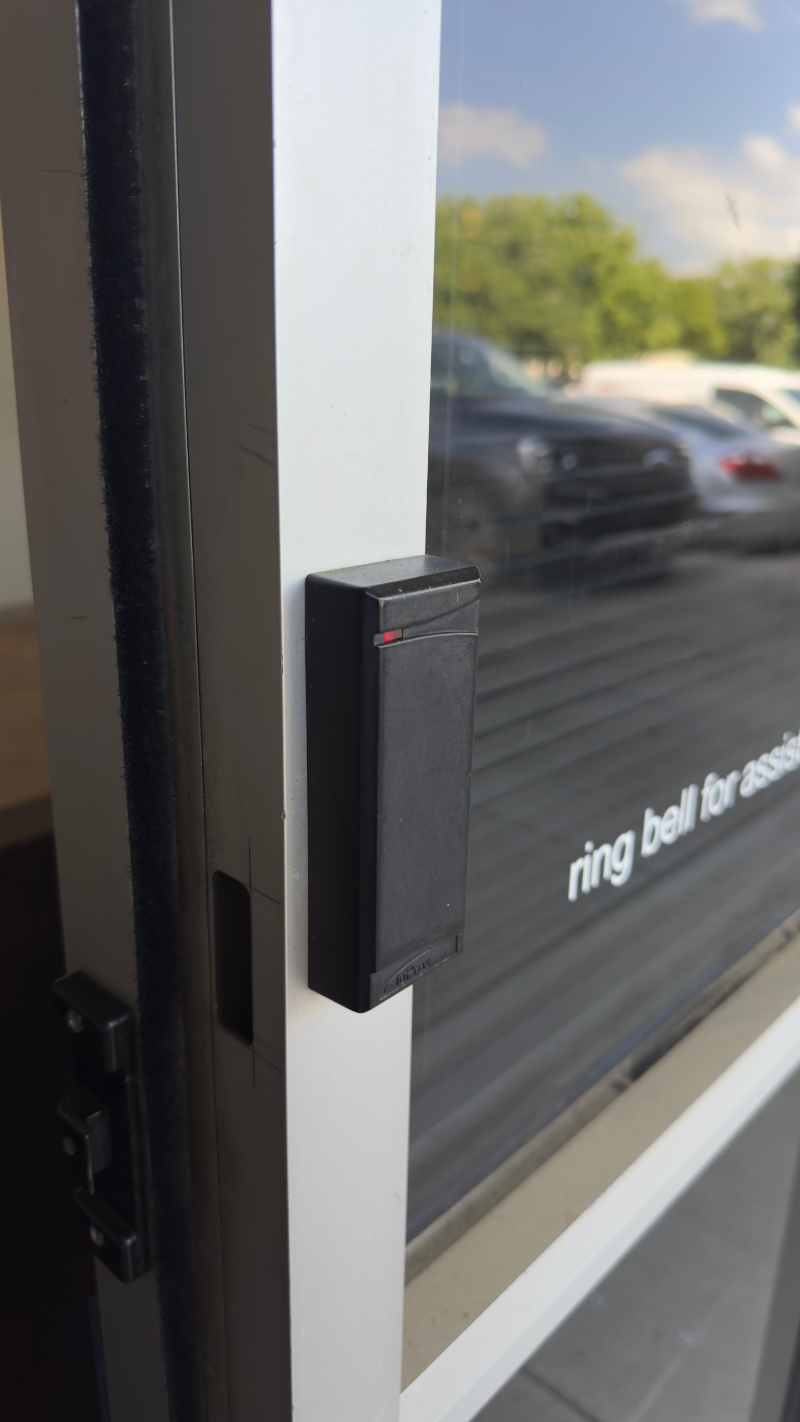
- Testing entry devices — keypads, card readers, or telephone entry — for reliable operation.
How Often Should a Gate Be Serviced?
Quick answer: Residential gates typically need service twice a year. Commercial and HOA gates with higher daily cycle counts often benefit from quarterly visits.
| Property Type | Recommended Frequency |
|---|---|
| Residential single-family | Twice a year |
| HOA / gated community | Quarterly |
| Commercial / industrial (high-cycle) | Quarterly to monthly, depending on volume |
What Gate Maintenance Costs
Quick answer: A routine residential maintenance visit typically runs $100–$250. Commercial gates with more components and higher cycle counts typically run $200–$450 per visit. Many owners save by bundling maintenance into an annual or biannual service plan.
Maintenance cost is far lower than the repairs it prevents — a $150 maintenance visit that catches a misaligned safety loop avoids a $300–$800 control board repair down the line if that fault had gone on to damage the electronics. See our gate repair cost guide for repair pricing by problem type.
Realistic Lifespan by Component
| Component | Typical Lifespan (With Maintenance) |
|---|---|
| Gate operator (correctly sized) | 10–15+ years |
| Control board / electronics | 8–12 years (shorter with storm exposure and no surge protection) |
| Photo-eye sensors | 5–8 years |
| Safety loop wiring | 7–10 years, dependent on soil movement |
| Hinges, rollers, track hardware | 5–10 years with regular lubrication |
These are general planning ranges, not guarantees — actual lifespan depends on daily cycle count, weather exposure, and whether the operator was correctly sized at install.
Safety Code and Compliance
Quick answer: UL 325 entrapment-protection devices — photo-eyes and safety loops — must remain functional throughout the gate’s life, not just at install. Maintenance visits should always include testing these devices, per Texas TDLR licensing standards.
Safety devices required under UL 325 degrade over time just like any other component — a photo-eye that’s drifted out of alignment or a safety loop with failing wiring is no longer providing the protection it’s required to. A maintenance visit should always test these, not just the mechanical parts. Installers and technicians in Texas are licensed through the TDLR — ours is License #B31188501.
Gate Maintenance Across Dallas, Fort Worth and Allen
North Texas storms are a leading cause of surge damage to control boards, which makes routine electrical inspection especially important for gates in Allen, Plano, Frisco and McKinney. Clay soil common across DFW also shifts more with seasonal moisture changes than sandier soils, which is why footing and safety-loop wiring checks matter more here than in some other markets.
Common Maintenance Mistakes
- Waiting until the gate fails to call for service, instead of catching issues on a routine schedule.
- Skipping safety device testing during maintenance because the gate "seems to be working fine."
- Ignoring a nuisance-faulting sensor instead of diagnosing why it’s faulting.
- Letting debris build up in a slide gate track until it accelerates roller wear.
What Property Owners Can Check Themselves
Between professional visits, owners can safely do a few basic checks: listen for new grinding or straining sounds from the operator, visually confirm nothing is blocking the photo-eye sensors, and check for visible debris in a slide gate track. Beyond that, we’d caution against DIY maintenance — gate operators involve line-voltage electrical work and safety-critical entrapment-protection devices that need to be tested correctly, not just visually inspected.
Choosing a Gate Maintenance Provider
- Are you licensed and insured in Texas? (We are — TDLR License #B31188501.)
- Does your maintenance visit include testing safety devices? Not just mechanical lubrication.
- Do you provide a written summary after each visit? You should know what was checked and what, if anything, needs attention.
- Do you offer a recurring service plan? Scheduled visits are more reliable than remembering to call each time.
- What brands do you service? Confirm they support your operator’s brand (LiftMaster, DoorKing, FAAC, Viking, Linear, Nice).
Glossary: Maintenance Terms Worth Knowing
| Duty Cycle | How many open/close cycles per day an operator is rated for. |
| Safety Loop | Wire embedded in the driveway that detects a vehicle and prevents the gate closing on it. |
| Photo-Eye Sensor | An infrared beam pair that stops the gate if something breaks the beam. |
| Surge Protection | A device that protects the control board’s electronics from power spikes. |
Scheduling Gate Maintenance
A scheduled maintenance visit is the cheapest way to extend your gate’s life and avoid surprise repair calls. Call 682-516-9940 to set up a visit, or request a free estimate below.
Frequently Asked Questions
How often should an automatic gate be serviced?
Residential gates typically need service twice a year; HOA and commercial gates with higher traffic often benefit from quarterly visits.
How much does gate maintenance cost?
A routine residential visit typically runs $100–$250; commercial visits with more components typically run $200–$450.
How long does a well-maintained gate operator last?
A correctly sized operator with routine maintenance can run reliably for 10 to 15 years or more.
What does a gate maintenance visit include?
Lubricating hinges and rollers, testing safety sensors and loops, inspecting the control board, clearing track debris, and checking entry devices.
Can I do gate maintenance myself?
Basic visual checks are fine, but full maintenance involves line-voltage electrical work and safety-critical devices that should be tested by a licensed technician.
Does maintenance really prevent expensive repairs?
Yes. Most costly gate repairs stem from small issues, like a misaligned sensor or worn hinge, that went unaddressed and eventually strained the operator.
Why do gate control boards fail more often in North Texas?
Storm-related power surges are a leading cause of control board failure in this region, which is why surge protection and electrical inspection matter here.
Do you offer a recurring gate maintenance plan?
Yes, we offer scheduled maintenance plans for residential, HOA and commercial gates across DFW.
What brands of gate operators do you service?
We service operators from brands including LiftMaster, DoorKing, FAAC, Viking, Linear and Nice.
Do you serve Allen and the greater DFW area for gate maintenance?
Yes, we provide gate maintenance across Dallas, Fort Worth, Allen, Plano, Frisco, McKinney and the surrounding North Texas area.