Panic Bar, Push Bar and Exit Device Repair
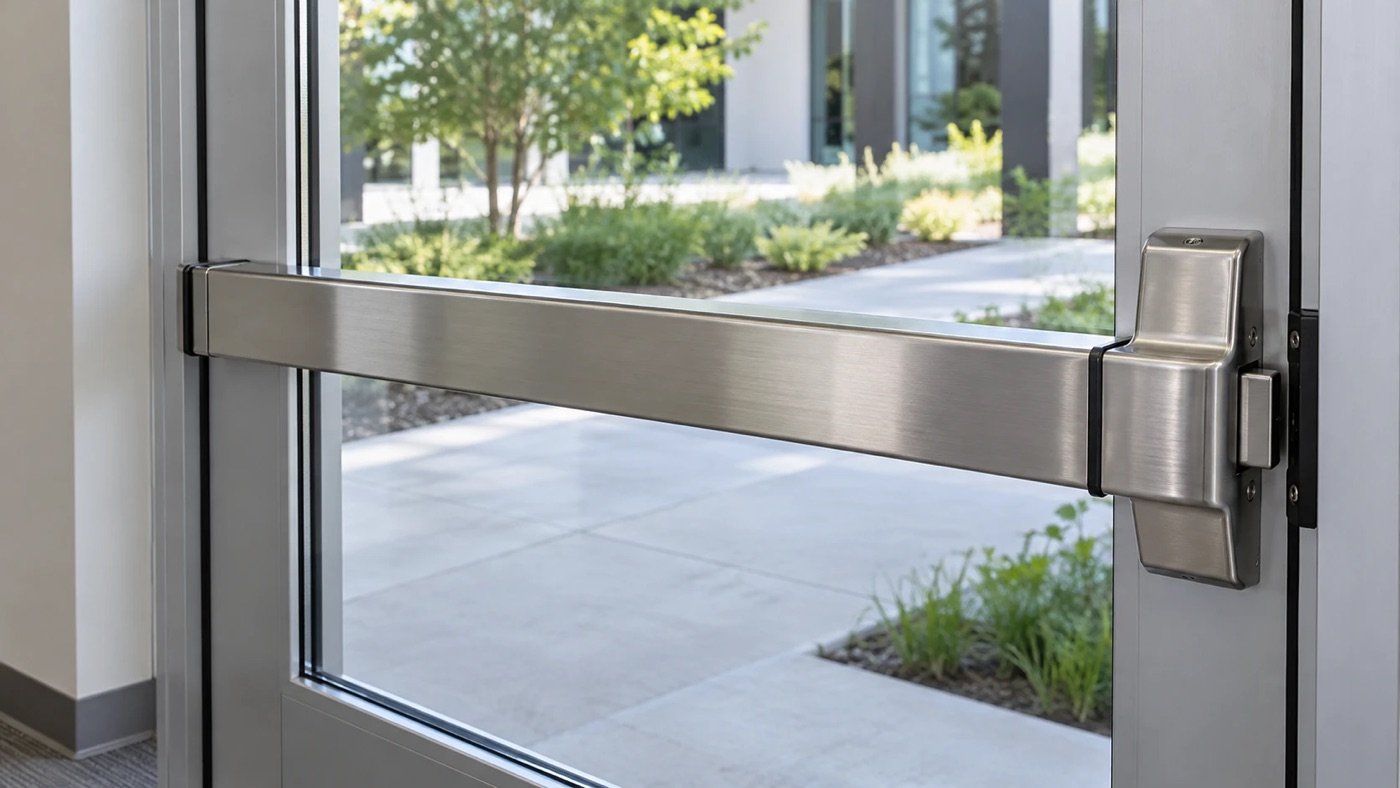
Whether you call it a panic bar, push bar, crash bar or exit device, it is the same hardware, and it has two jobs: let people out with one push and keep the door locked from the outside. When it stops doing either one, you have a security problem or a life-safety problem. A1 Security Gate & Intercom repairs rim, surface vertical rod, concealed vertical rod and mortise exit devices on aluminum storefront, hollow metal and wood doors across Dallas–Fort Worth.
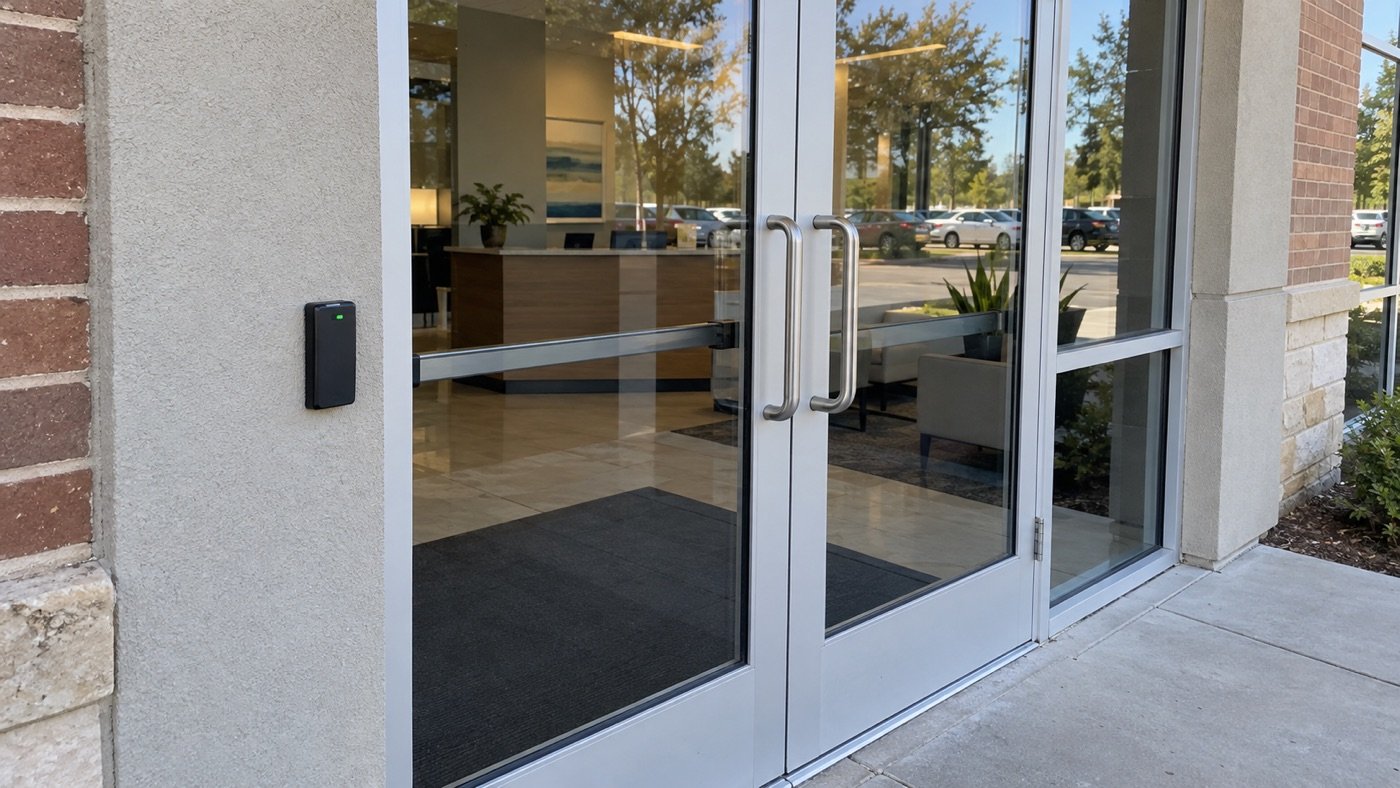
We also repair electric panic bars, the electrified exit devices that unlock from a card reader, keypad or intercom. These combine mechanical hardware with power and access control, which is exactly the mix we work on every day.
Common Panic Bar Problems
Panic Bar Not Latching or Door Not Locking
If the door swings shut but the latch does not catch, the cause is usually outside the bar itself. Doors sag as hinges and pivots wear, so the latch bolt no longer lines up with the strike. A closer that is set too slow can stop the door just short of latching. We also find dogging left engaged, a latch bolt worn down from years of use, and debris or a bent strike in the frame. We re-align the strike, adjust the closer's latch speed and replace worn latch parts so the door locks every time.
Top Latch Not Working on a Vertical Rod Panic Bar
Vertical rod devices lock at the top and bottom of the door instead of the side, which is common on double doors. On many surface vertical rod devices, the top latch is held open while the door is open, then a trigger releases it as the door closes. If that trigger is bent or the top strike has shifted, the top latch stays retracted or misses the strike. Rods also drift out of adjustment, and bottom rods get bent or drag on the threshold. Concealed vertical rods are inside the door, so those repairs take more labor and sometimes mean taking the door down.
Panic Bar Stuck, Sticking or Hard to Push
A bar that binds, sticks halfway or springs back slowly usually has a broken internal spring, loose mounting screws or a chassis knocked out of line by carts and pallets. A bar that is hard to push is not a nuisance item. It slows people down in an emergency, and it should be fixed.
Dogging Not Working
Dogging holds the bar down so the door stays unlatched during business hours. When the hex key strips or the dogging cylinder fails, the door either will not stay unlocked or will not re-lock. Fire-rated doors cannot use mechanical dogging at all; electric latch retraction is the code-friendly way to get the same result on those openings.
Outside Lever, Pull or Key Not Working
The exterior trim is a separate part of the exit device. A lever that spins freely, a key that will not turn or a cylinder cam that no longer reaches the device can usually be repaired or replaced without changing the bar.
Electric Panic Bar and Latch Retraction Repair
An electric latch retraction (ELR) panic bar pulls its own latch back when the access system tells it to. When a card is accepted but the door stays latched, we check four things: the power supply, the controller relay, the wiring that crosses from the frame into the door through a power transfer hinge or door loop, and the retraction mechanism itself. Solenoid-type kits draw a large inrush of current, so an undersized or aging power supply can make the bar click without fully pulling the latch. Wires that flex through the hinge every time the door opens are another common failure point. We repair Von Duprin electrified devices and Command Access latch retraction kits and power supplies, and we can retrofit many existing bars with electric latch retraction.
What We Repair
- Latch bolts, strikes and latch alignment on rim and mortise devices
- Top latches, bottom latches, rods and triggers on vertical rod devices
- Push pads, springs, end caps and mounting hardware
- Hex key and cylinder dogging
- Exterior lever, pull and cylinder trim
- Electric latch retraction, electrified trim and request-to-exit switches
- Panic bar replacement when the device is worn out or wrong for the door
Exit Device Brands We Service
We work on all brands, including Von Duprin, Adams Rite and Command Access, plus electric strikes from HES and Securitron that pair with rim devices. We also repair systems installed by other companies, so it does not matter who put the hardware in. If the door also has a maglock or strike that is giving trouble, see magnetic lock repair and electric strike repair.
Safe Things to Check Before You Call
- Is the dogging engaged? Try un-dogging the bar with the key.
- Does the door close all the way, or does it stop short?
- On a vertical rod door, look up: is the top latch out and lined up with the strike?
- On an electric bar, listen for a click when a card is presented.
- Never chain, padlock or wedge a panic bar door shut. It blocks the exit and violates fire code.
Repair or Replace?
Most panic bars can be repaired with parts or a service kit. Replacement makes more sense when the chassis is cracked, parts are no longer made, the device is not rated for a fire door it is mounted on, or you want to add electric latch retraction to an old bar that cannot take it. If you need new hardware, our push bar and panic bar installation service includes free estimates and a 1-year workmanship warranty.
How a Panic Bar Repair Visit Works
Call or Request a Visit
Tell us the door, the hardware and the symptom. Service calls start at $180 per hour.
Inspect the Opening
We check the bar, the latches, the strikes, the closer and the door hang together.
Repair or Quote
Common fixes are done on the spot. Parts or a replacement are quoted first.
Test Exit and Lock
We confirm one-push exit, reliable latching and any card release before we leave.
24/7 Emergency Panic Bar Repair
An exit door that will not lock at closing time leaves your business open overnight. One that will not open is a life-safety issue. We provide 24/7 emergency service and same-day service when the schedule allows. Call (682) 516-9940 or request a repair visit. For storefront doors, closers and locks, see commercial door repair.
We repair panic bars and exit devices for businesses, warehouses, schools, churches, clinics, apartments and HOAs in Dallas, Plano, Frisco, Allen, McKinney, Richardson, Irving, Garland, Carrollton and Fort Worth, plus the surrounding North Texas cities.